Repetitive preparation
Manual follow-ups, copying inputs and lengthy comparisons.
Understanding spreadsheet habits and testing where a new planning experience supported or interrupted specialist work.
The interview sample brought together two specialist perspectives to understand handovers, data preparation and planning decisions.
Source: discovery research report. Role labels are generalised. Counts describe the interview sample, not the later usability-test sample.
Interviews with domain specialists revealed a familiar workflow with costly manual preparation.
Request forecasts and follow up on missing inputs.
Compare new data with the previous plan.
Adjust inputs and assess operational effects.
Review the proposal with stakeholders.
Manual follow-ups, copying inputs and lengthy comparisons.
Direct changes, contextual judgement and control over the plan.
Moderated prototype testing considered independent completion alongside perceived ease.
Some positive ratings followed an explanation of the intended interaction.
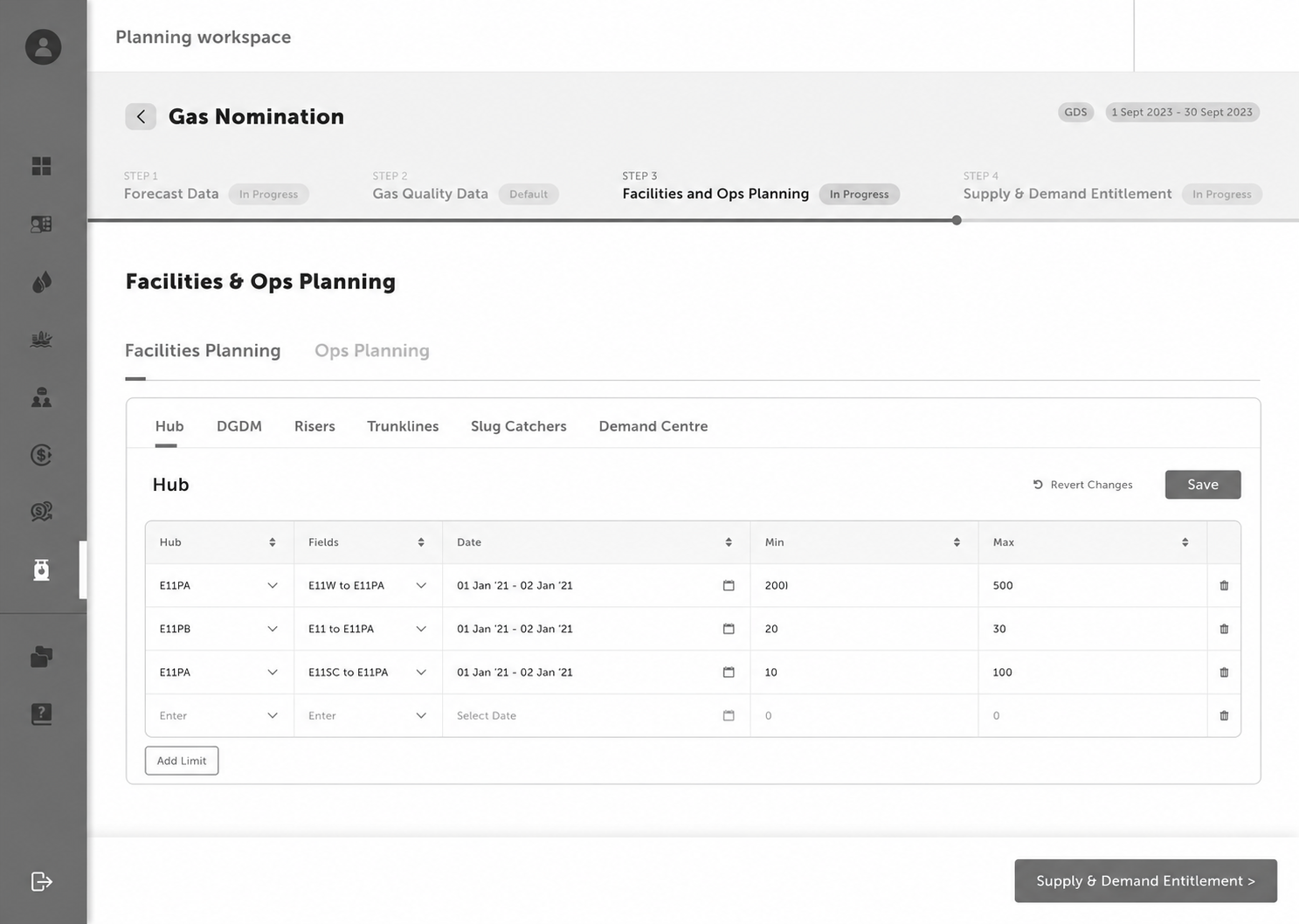
Users overlooked tabs and tried editing directly in tables.
Use independent task performance to locate friction.
It does not change whether a participant could complete the original task independently.
Findings became proposals for design, development and domain stakeholders to review.
Users treated the table like their existing spreadsheet.
Assess controls and operational risks with the team.
Important navigation and remarks were overlooked.
Clarify navigation and bring exceptions into the review flow.
Users expected changes to persist as they worked.
Discuss autosave and explicit feedback with developers.
Some information already existed in an earlier plan.
Start with available data and let experts amend it.
My work covered research, journey analysis and collaborative prototype evaluation.
Personas, journey analysis and usability findings linked expert behaviour to specific design recommendations.
The reports do not establish that every proposal shipped or quantify post-release efficiency gains.
Edited project screenshots accompany generalised diagrams of the research and design reasoning. Visuals do not imply measured production outcomes. Work was delivered collaboratively.